Chris Laney
Block G
9/30/16
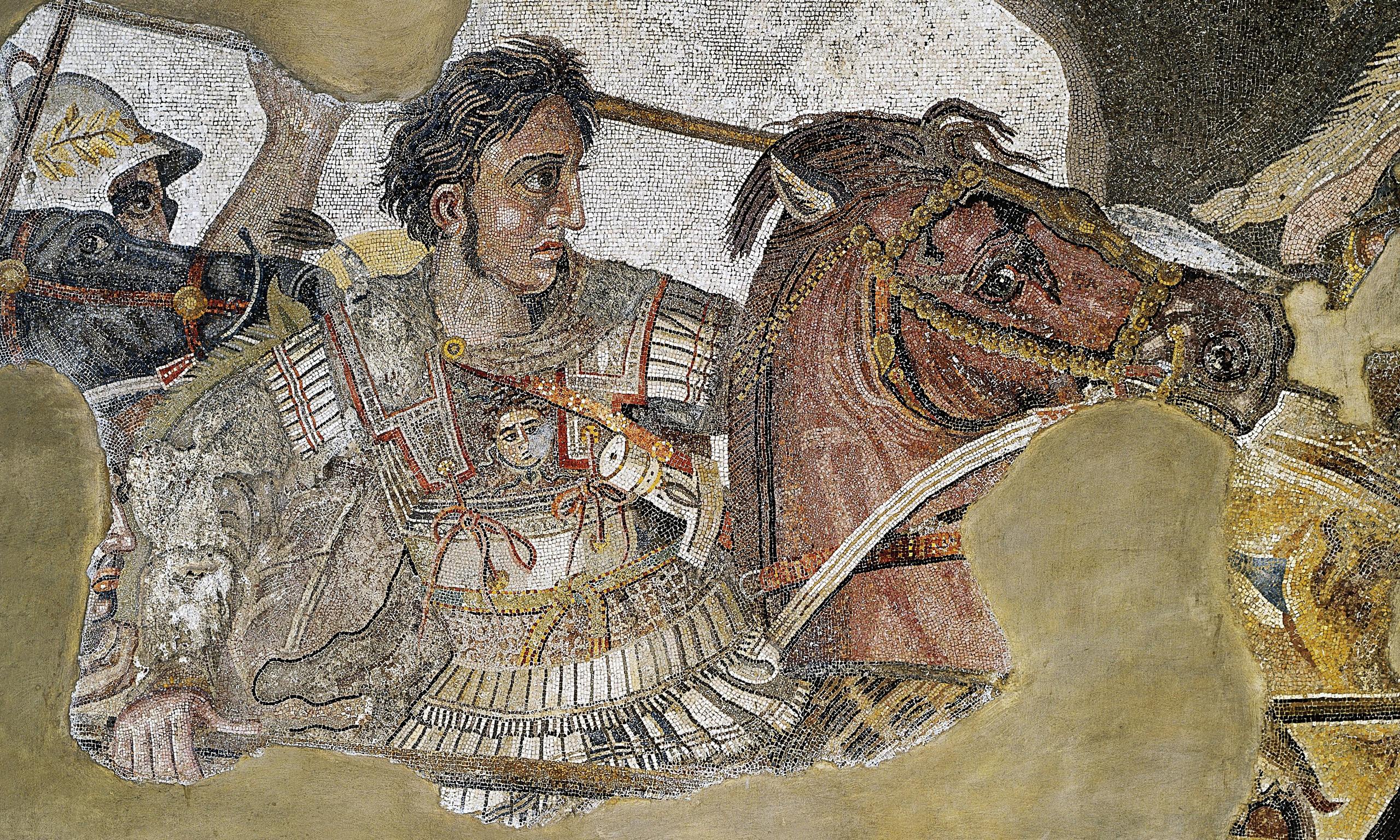 |
| https://en.wikipedia.org/wiki/Alexander_the_Great |
Alexander the Great, was a great person not only because of his military skills but also because of the life of adventure he had. Alexander was one who wanted to be know in "great" terms, such as a great leader. Since Alexander was such a great leader, he also defeated the Persian empire and it's army of “immortals.” Since Alexander defeated the Persian army, he quickly conquered almost all of Asia minor. Alexander deserved his name because he was very tactical and strategic in battle, defeated the Persian empire and conquered almost all of Asia minor and the world today would see him as such a great leader.
 |
| https://en.wikipedia.org/wiki/Bucephalus |
Alexander "the great" was made one of the commanders of the great Macedonian army by his father Philip II, because of this Alexander was very tactical and strategic. Alexander was said to be the son of Zeus and he lived up to that by taming a horse no one else could named "Bucephalus", literally meaning "ox-head." He also was very talented in military leadership because of him becoming a cavalry commander very early in his life. Alexander was also taught by Aristotle, he was taught political science, literature as well as many other subjects.(Sacks, David. “Alexander the Great.”)Because of these subjects taught to Alexander he became even better of a leader. Considering all the things Alexander learned from Aristotle as well as from being a cavalry commander, he was more than ready to become a leader or deserving of the name "the great."
Alexander was the one who defeated the Persian Empire ruled by king Darius. However the Persian Empire was not fully defeated, it eventually became part of a culture Alexander "the Great" created. The culture Alexander created was a mix of Persian, Egyptian and Greek, creating the "Hellenistic Culture," "Hellenistic" means "Greek-like."(Watts, Tim J. "The Hellenistic Age.") The Persian Army consisted of their army of "immortals," as well as their monarchy for their government. After Alexander had defeated the Persian army, king Darius fled from Alexander. Darius was eventually killed by Bessus (his cousin), and so Alexander sought after the Bessus who killed Darius and eventually killed him.
 |
| http://www.ancientgoldcoins.com/macedonian-empire |
In the modern world Alexander would be seen as a great leader because of the armies he commanded, the empires he defeated and the culture he created by mixing the empires he dismantled. By creating this culture he brought together all the areas he ruled, however he died after eleven years of ruling. When Alexander died the three main parts of his empire, Macedonia ruled by the Antigonids. The Egyptian empire was ruled by the Ptolemies and the Persian empire ruled by the Seleucids.
Alexander the Great was one who changed many cultures by scrambling them with others, maybe by conquering those empires. He was still "great" in what he did, he was a great leader, conquered a lot of land including the great Persian empire and its ruler king Darius III. As well as being a "great" leader back then in those 11 years he would also be considered great by today's standards, such as being strong and independent. Unlike many of the modern leaders he has a great temperament.
Grossman, Mark. “Alexander the Great.” World Military Leaders: A Biographical Dictionary, Facts On File, 2007, Ancient and Medieval History Online, http://online.infobase.com/HRC/Search/Details/215842?q=Alexander%20the%20Great.
Watts, T. J. (2004). The Hellenistic Age. In World History: Ancient and Medieval Eras. Retrieved from https://ancienthistory.abc-clio.com/Topics/Display/15
Plutarch. The Parallel Lives. Vol. 7, Loeb Classical Library, 1919. Penelope
Uchicago, Bill Thayer, penelope.uchicago.edu/Thayer/E/Roman/Texts/
Plutarch/Lives/Alexander*/3.html. Accessed 29 Sept. 2016.

1) I thinks it’s interesting how much you included about Alexander the Great. You gave lots of details on his early life and accomplishments when he was older. And you clearly showed that you thought Alexander the Great deserves the title “Great”.
ReplyDelete2) Your research lined up with everything I found.
3) I think you could have improved your blog if you add some counter points. You talk a lot about the great things Alexander accomplished and why he’s great, but you don’t have any points on why people would see Alexander as not “Great”. It makes Alexander seem to perfect a person that has no flaws.
There is a bit of repetition but I really like the achievements you talked about throughout his youth and adulthood. I do wish I had seen more accomplishments other than military prowess. But other than that your information was good and his accomplishments throughout his life were well written and a bit more quotes would be nice.
ReplyDeleteThis comment has been removed by the author.
ReplyDelete1. I liked how you mentioned Bucephalus, out of the posts that I read, I didn’t see much of him mentioned.
ReplyDelete2. My research showed much of the same things that you had put, except for how he defeated his enemies.
3. You seemed to talk more about Alexander as a military General, and mentioned little about his vision for a unified people, or how he changed the Greek culture.
1. Your fourth paragraph gives a great summary on the main reasons why Alexander is great, which I found helpful and persuasive.
ReplyDelete2. Our research is very similar, however, I didn't quite find anything on Bucephalus.
3. In your first paragraph, you mention that the Persian empire were immortals, but you put it in quotation marks. I would've liked an explanation as to why you chose to do this. Something as simple as "its army of 'immortals,' as they called themselves" would've sufficed. I simply would've liked to know who gave them that title.
1. Your fourth paragraph gives a great summary on the main reasons why Alexander is great, which I found helpful and persuasive.
ReplyDelete2. Our research is very similar, however, I didn't quite find anything on Bucephalus.
3. In your first paragraph, you mention that the Persian empire were immortals, but you put it in quotation marks. I would've liked an explanation as to why you chose to do this. Something as simple as "its army of 'immortals,' as they called themselves" would've sufficed. I simply would've liked to know who gave them that title.