 |
| Alexander the Great |
 |
| Aristotle |
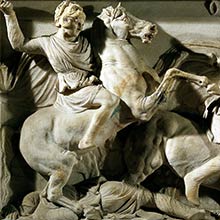
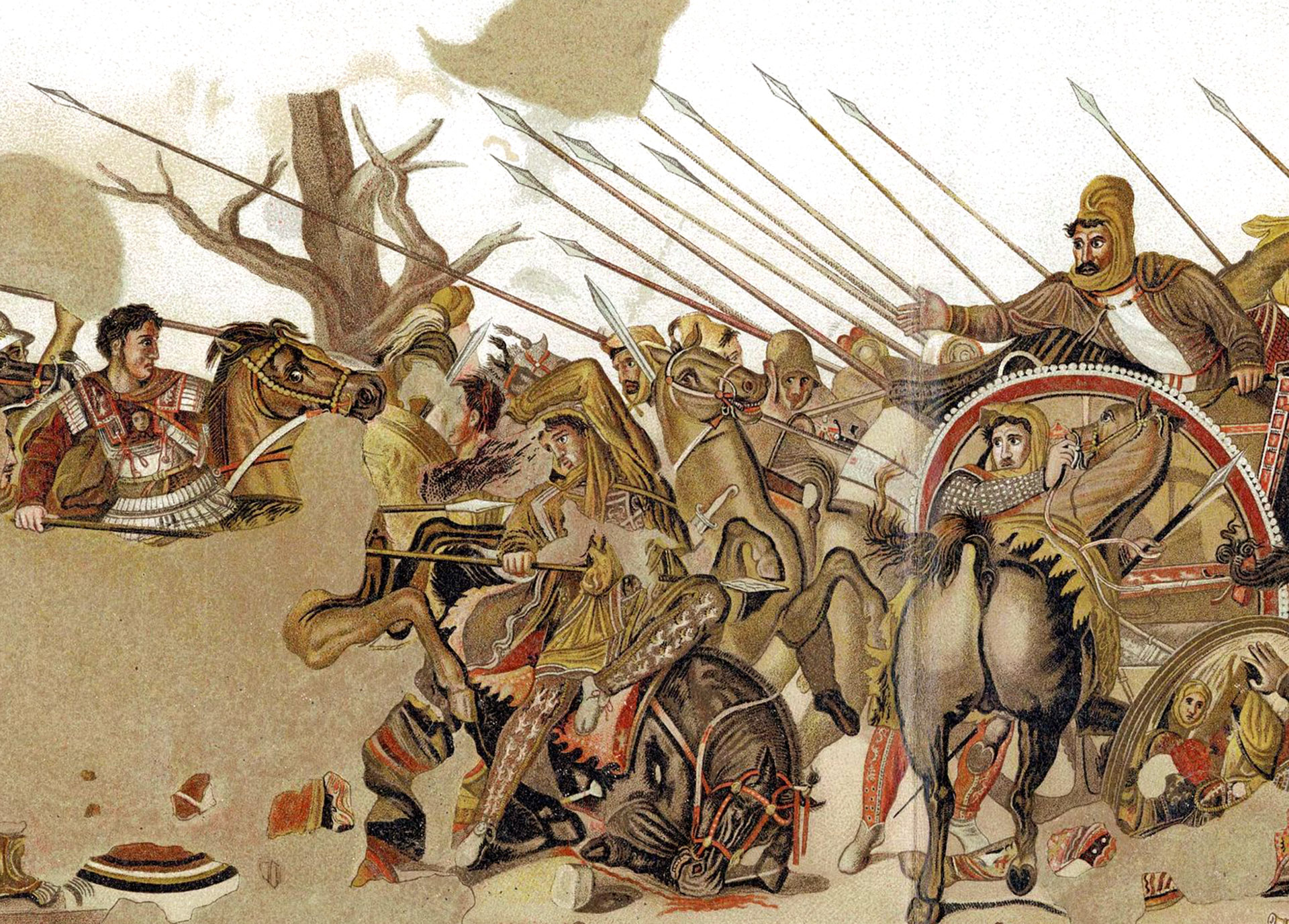
Alexander was tutored by Aristotle, where he was taught literature, science, and geography. He developed a love for art and culture, and he carried books with him to read on his campaigns. According to the Joshua J. Mark, “The two men remained in contact through letters, and Aristotle's influence on the conqueror can be seen in the latter's skillful and diplomatic handling of difficult political problems throughout his career”(Aristotle). Alexander was taught how to command troops, use weapons, and ride horses at a young age, preparing him to lead an army. He was taught war strategy and to be intelligent, logistical, and quick with his decisions. Many of his battles were improvised, which put his skills to the test. He used these techniques to conquer a considerable amount of land.
 |
| Alexander Defeats the Persians |
 |
| Terracotta Draped Woman |
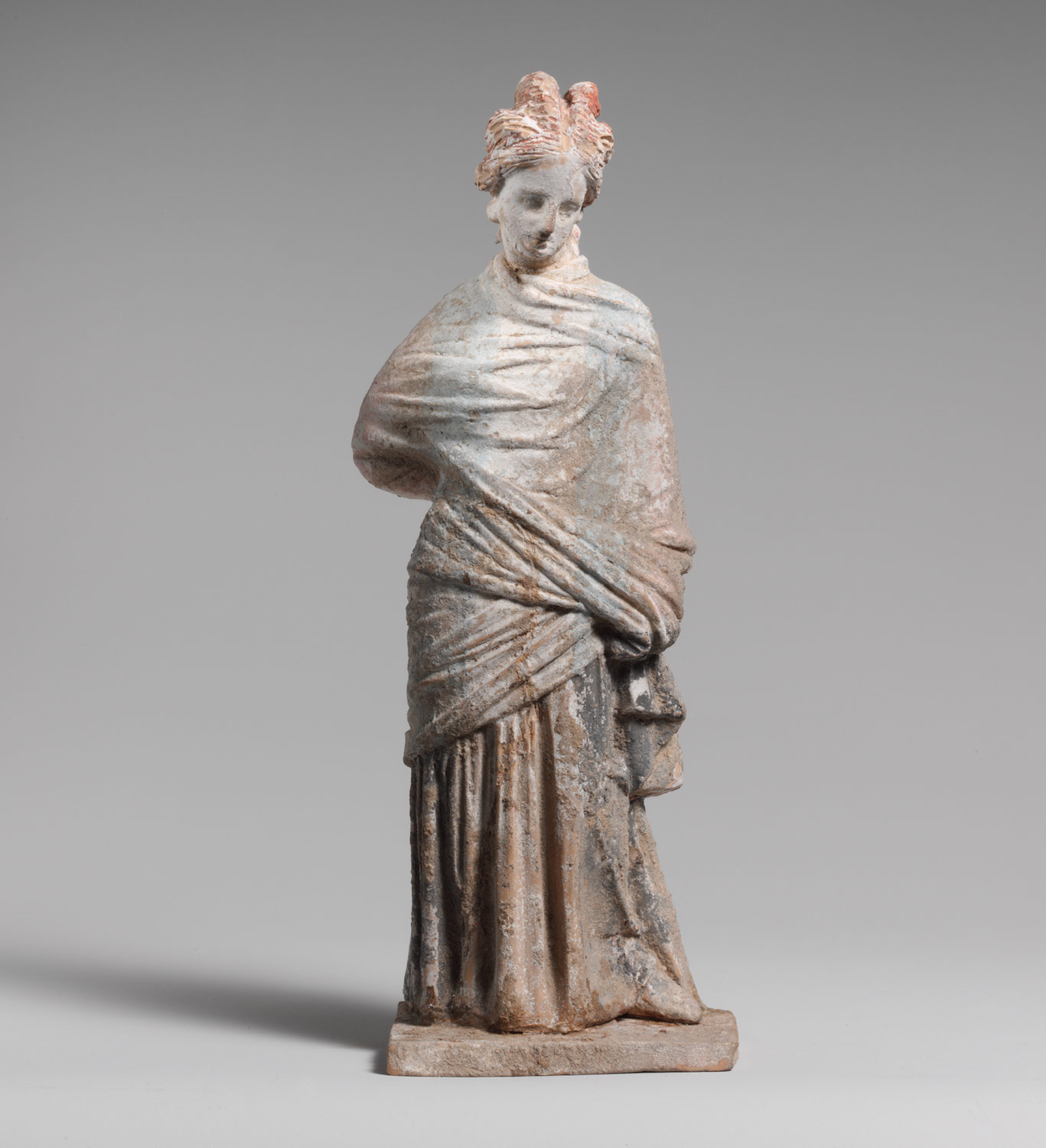
In his wake, Alexander founded cities and brought in Greek citizens to populate them. Along with the Greeks came their culture, which mixed with the other Asian cultures. This blend was known as the Hellenistic Age. Many subjects thrived from the merge of cultures including medicine and engineering, and, to preserve ancient writings, great libraries were constructed. The normal art form was completely changed from abstract to a more realistic look. "The migration of Greek settlers and the creation of Greek ruling classes resulted in a more cosmopolitan and international worldview than any that had come before"(Watts). This blending of culture is credited to Alexander the Great, furthering his diverse influence on the ancient world.
"Why do you hesitate to extend the power of Macedon—your power—to the Hyphasis and the tribes on the other side?"(Alexander the Great). Alexander was a great and inspiring leader that strove to conquer as much as his army would allow. His first-rate strategies allowed him to conquer extensive amounts of land and even create an entire culture. He is viewed as an exemplary leader, and is world-renowned even today. Alexander's influence simply cannot go unnoticed, which landed him a well-deserved spot among the Greats.
Works Cited
Cartledge, Paul. “Alexander the Great: Hunting for a New Past?” History Today, 7 July 2004, www.historytoday.com/paul-cartledge/alexander-great-hunting-new-past. Accessed 29 Sept. 2016.
History.com Staff. “Alexander the Great.” History.com, A+E Networks, 2009, www.history.com/topics/ancient-history/alexander-the-great. Accessed 28 Sept. 2016.
“To This Empire There Will Be No Boundaries.” Ancient and Medieval History Online, Facts On File, online.infobase.com/Auth/Index?aid=180518&itemid=WE49&primarySourceId=6406. Accessed 29 Sept. 2016.
Watts, T. J. (2004). The Hellenistic Age. In World History: Ancient and Medieval Eras. Retrieved from https://ancienthistory.abc-clio.com/Topics/Display/15

This comment has been removed by the author.
ReplyDelete1. I find it interesting that you talked about how Alexander created these structures and populated them with Greek people and how a culture was formed from it but, it could use a bit more detail with the culture.
ReplyDelete2.My research showed less about what Alexander did with the places he conquered but my research also showed a bit more about the creation of the Hellenistic culture and what it did for humanity today.
3.I think that this post would be even better than it is if you talked a little more in detail about the hellenistic culture.
1. I liked how you mentioned how the Hellenistic culture impacted new discoveries such as medicine and engineering. It provided more information on how the Hellenistic culture really affected the world.
ReplyDelete2. We both have pretty similar research, but it caught my attention when I read about how the public agrees with how he is great. Many people also do think he is not that great as they say he is.
3. I wish you talked more about his downpoints, I know that sounds a little weird but it would be a good way to be able to turn those points into positive things. It would really enhance the reasons for why he is great.